Every brand that makes a physical product eventually faces the same question: should the film be shot on a set, or built in software? Both can look extraordinary, and both can fall flat. The right answer depends far less on taste than on the product, the number of versions you need and what the film has to do. This guide explains how the two approaches differ, where each one wins, and how to decide without being sold to.
The Short Answer
CGI tends to win when you need total control, many versions of the same scene, or a scene that is impractical to stage. Live action tends to win when the film is about real people, real emotion or real-world use. Plenty of the best brand films use both. Here is how they compare on the factors that usually decide it.
| Factor | CGI | Live action |
|---|---|---|
| Creative control | Every frame is art directed, including light, reflections, camera and environment | Limited by the set, the weather, the location and the day |
| Consistency across versions | The same scene can be repeated across colours, sizes and variants | Each variant needs to be set up and shot again |
| Impossible or costly scenes | Ice, water, scale, motion and fantasy settings are all possible | Often needs special effects, specialist crews or compromises |
| Products that do not exist yet | Can be built from specifications before a physical sample exists | Needs a finished product or a prototype |
| Real people and emotion | Possible, but not the strongest use of the technique | The natural strength of the format |
| Changes late in the project | Often handled by adjusting the scene and re-rendering | Often means going back to reshoot |
| Best for | Product hero films, launches, ads, repeatable content | Founder stories, testimonials, documentary and lifestyle |
What CGI Is Genuinely Good At
Scenes you could not shoot for real
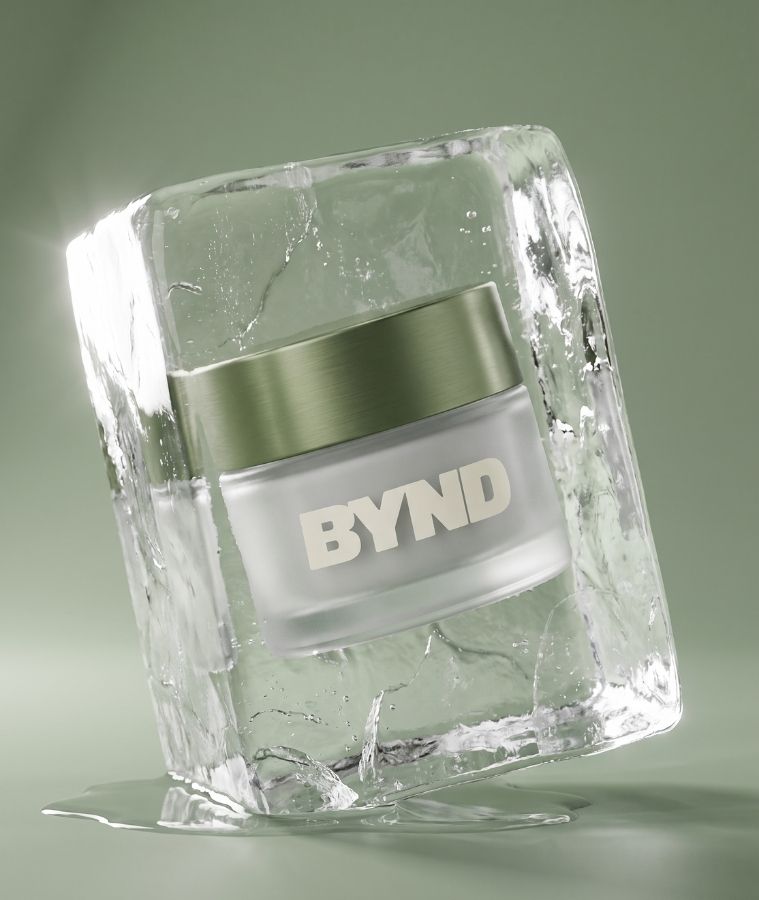
A jar frozen inside a melting block of ice, a product floating through an impossible space, a scale that no studio could build. If the idea is the point of the film, software removes the limits of what can be staged. It is also why CGI films are often so striking: nothing in the frame is there by accident.
Total control of the look
In a live shoot, a crew works with whatever the location and the day provide. In CGI, every frame starts as an empty scene and is built deliberately. Lighting, materials, camera moves and reflections are all chosen, which means the film can match a brand's look exactly and hold that look across many pieces.
Many versions from one scene
If you sell a product in several colours, sizes or flavours, a CGI scene can be reused with the product swapped, instead of staging and filming every variant separately. The same applies to formats. A well-built scene can be delivered in the crops and codecs you need for social, ads and your website without starting again.
Products that are not ready yet
If you are launching something new, a film can be built from the product's design files and reference material before the first production run. That can let your launch content be ready when the product is.
Content that has to keep coming
Brands that need a steady feed, not a single hero film, benefit from scenes that can be reused and adapted. That is why we plan content in monthly blocks and produce it in batches, so the feed stays full without a shoot every week.
Where Live Action Is the Better Choice
Being honest about this matters, because CGI is not the answer to everything.
- Real people and real emotion. Founder stories, customer testimonials and anything that depends on a genuine human moment is stronger on camera.
- Documentary and behind-the-scenes content. Audiences often want to see the real workshop, the real team and the real process.
- Quick, simple clips. If the idea is simple and you need something this week, a well-lit shoot is often faster and more proportionate.
- Products where real-world behaviour is the story. If the film must show the genuine texture, wear or use of a product, filming the real thing can be more convincing.
The Hybrid Option
You do not have to pick one. Longer brand films often mix live capture with computer generated inserts. The people, places and moments are filmed for real, and CGI handles the shots that are impossible or impractical, such as macro detail, impossible camera moves or product reveals. The mix can give you authenticity where it matters and control where it matters.
Six Questions to Decide
- Does the product exist yet? CGI can start from design files, but it needs accurate specifications and references so the model matches what you will actually sell.
- How many versions do you need? The more variants, formats and repeat uses, the more CGI tends to make sense.
- Does the film need people? If people and emotion carry the idea, lean toward live action or a hybrid.
- Where will it run? Social, paid ads, your website and out-of-home all have different format needs. Plan the crops from the start.
- How much control do you need? If the brand look is precise, CGI offers more control over every frame.
- What might change after sign-off? Ask how changes are handled in each approach, so late edits do not become late surprises.
Keeping CGI Honest: What Australian Law Says
CGI is a technique, and it is perfectly legal to use in advertising. What matters is the impression the finished film creates. The ACCC explains that it is illegal to engage in conduct that is misleading or deceptive, or to make false representations, and that the rules apply to online content as well. The ACCC's guidance on false or misleading claims adds that a business must be able to prove a claim that a product has a particular quality or benefit.
For a CGI product film, some practical habits follow from that:
- Build the model from accurate specifications, so the product on screen matches the product you ship.
- Show true colours, sizes and finishes, and avoid depicting results or performance the product cannot deliver.
- Be especially careful with products where the film could imply a result, such as skincare, food or anything health related.
- Keep an approved reference and written sign-off, so everyone agrees the film represents the product fairly.
This is general information, not legal advice. If your product makes performance, health or environmental claims, check them with a qualified adviser before the film goes live.
How a CGI Project Runs
One reason brands hesitate over CGI is that it feels like a black box. It should not be. A well-run project has clear stages and clear sign-offs:
- Brief. Agree what the film has to do, who it is for and where it will run, before anything is built.
- Concept. Boards and a written treatment covering the structure, pacing and the shots that carry the idea.
- Look development. Assets, materials and lighting tests, ending with a still frame you sign off that looks like the final film.
- Production. Animation, simulation and rendering, with reviews at animation lock and at first render.
- Delivery. Grade, sound and every crop and codec you need, packaged and named for each platform.
You can see how this plays out on our own CGI product film and across our selected work. The full list of what we make, from product films to brand films and planned social content, is on our services page, and you can learn more about how we work on the studio page.
So Which Should You Choose?
If the film is about a product, needs to look perfect and may need many versions, CGI is usually worth a serious look. If it is about people and genuine moments, film it for real. If it is about both, combine them. The most useful first step is a conversation about the brief, because the right answer comes from what the film has to achieve, not from the technique.
Got a product worth filming? Tell us what it is, where the film will run and what it needs to do, and we will tell you honestly whether CGI, live action or a mix is the better fit. Start a project.