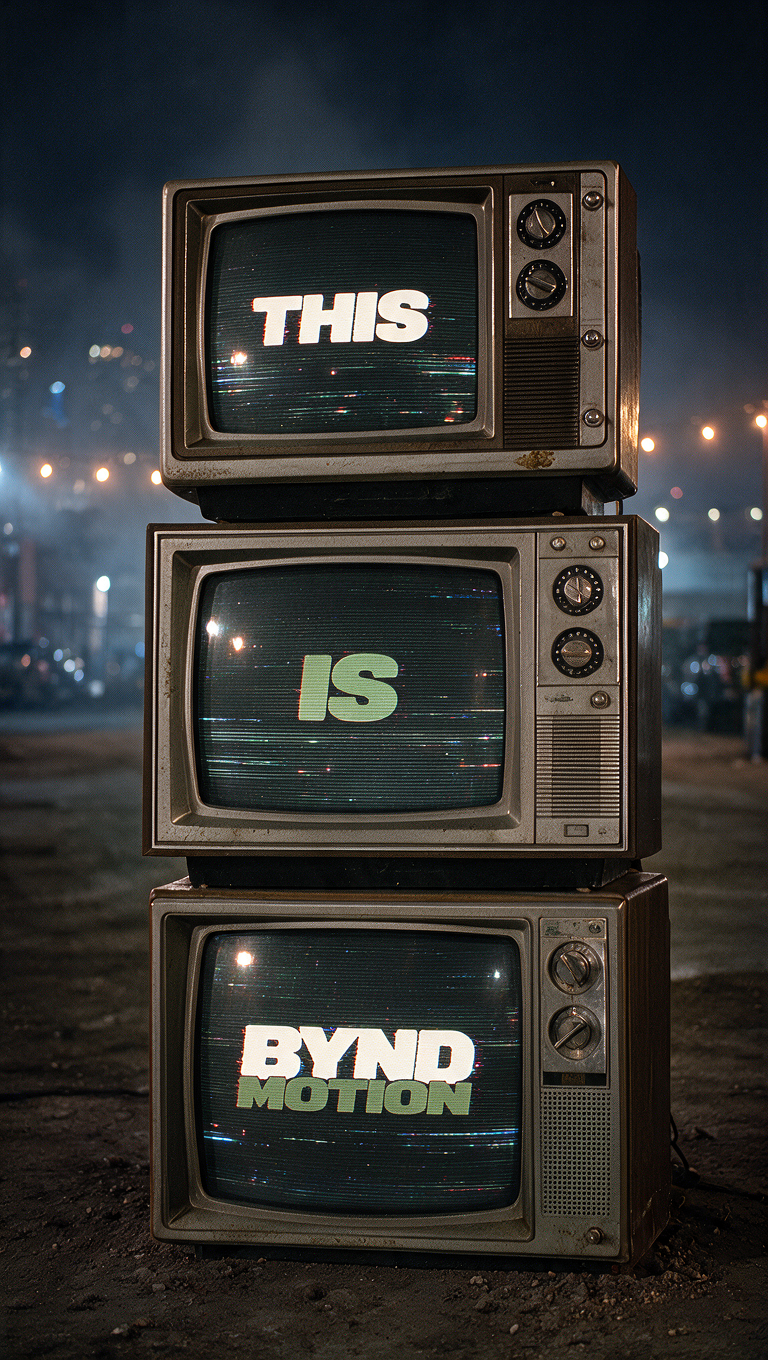
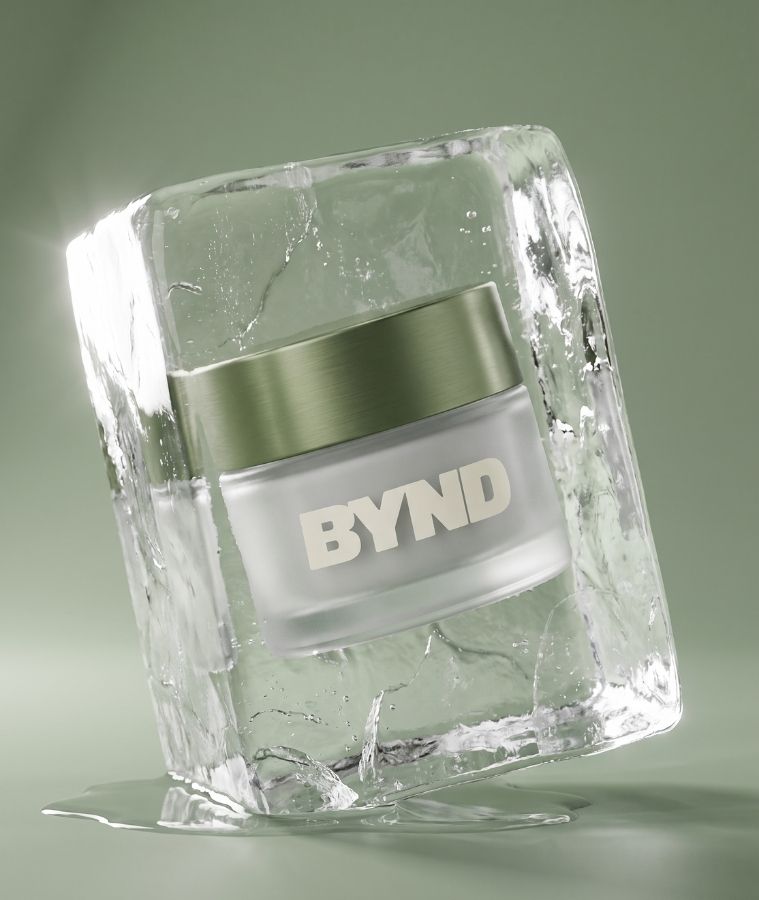
FOOH ads, short for fake out-of-home, are CGI billboard and street campaigns that look like real outdoor advertising but exist only on screen. A studio builds the billboard, the product or the stunt in software, places it into a real-looking location and publishes it on social media. No media space is booked and nothing is physically installed. If you are a brand thinking about commissioning one, this guide explains what FOOH is, why it works, how it is made, the honesty rules in Australia and exactly what to put in your brief.
What Is a FOOH Ad?
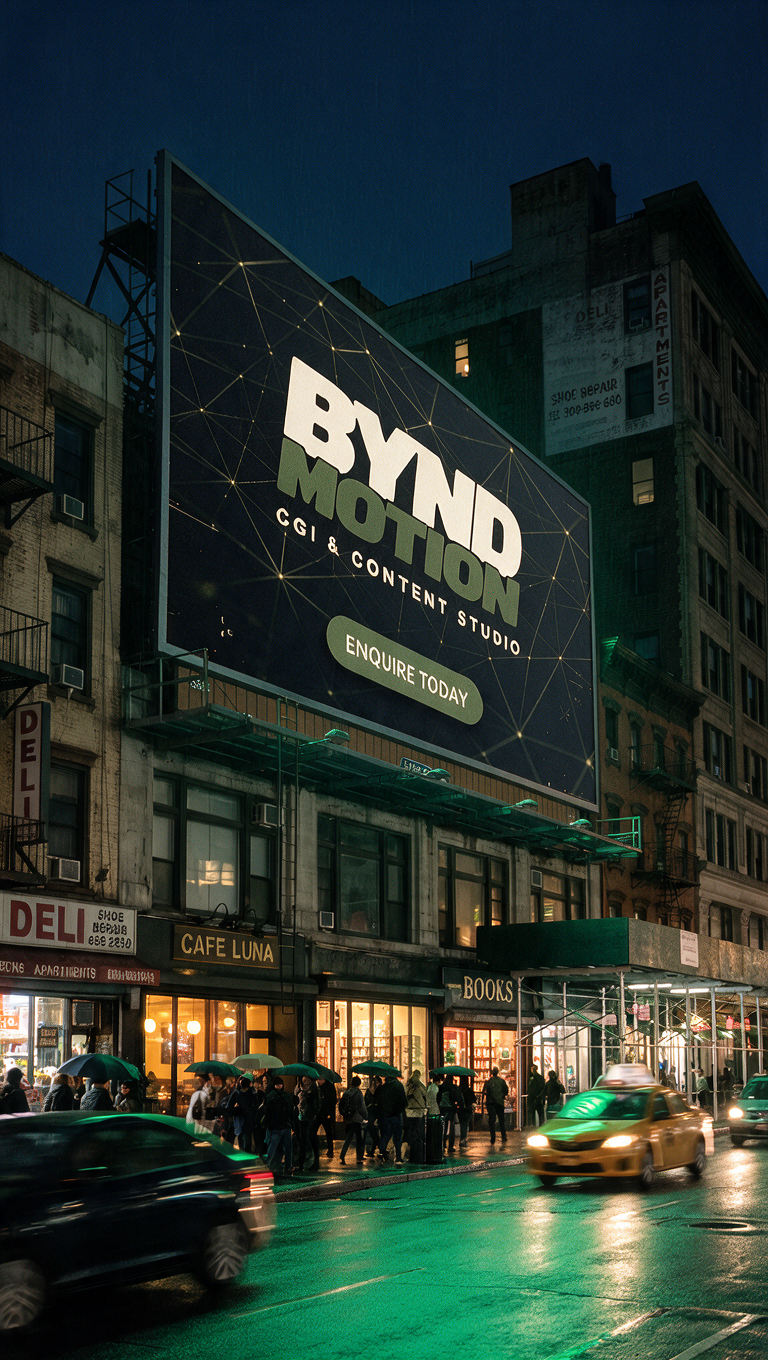
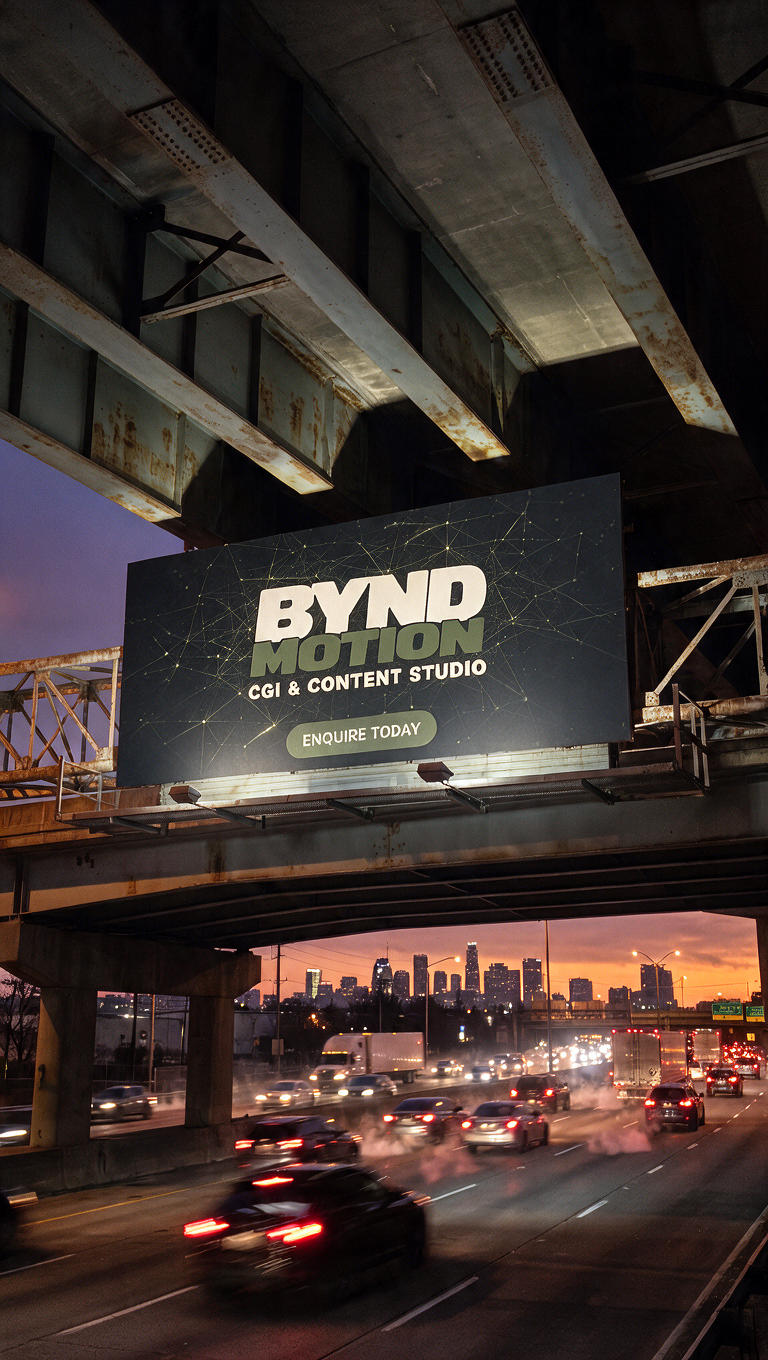
Traditional out-of-home advertising is physical: billboards, bus shelters, building wraps and street installations. FOOH borrows the look of that world and removes the physical part. The audience is not the people walking past. It is the people scrolling, who see what appears to be a striking piece of outdoor advertising filmed on a phone.
The format covers a range of ideas: a billboard in a famous location, a giant version of a product resting on a building, an object moving through a city street, or a train or bus transformed into something else. What they share is that the scene is constructed, the idea is simple enough to read in a second, and the result is made to be shared.
FOOH vs Real Out-of-Home
| Factor | Real out-of-home | FOOH |
|---|---|---|
| Where it is seen | On the street, by people nearby | On social media, by anyone |
| What you pay for | Media space, printing or build, installation and permits | Concept, CGI production and editing |
| Creative limits | Physics, safety, council rules and the site itself | Whatever can be built and made believable |
| Locations | One site per booking | Any city, and several from one idea |
| Changes | Costly once printed or installed | Adjusted in the scene and re-rendered |
| Best for | Local presence and repeated exposure in one place | Reach, launches and shareable moments |
The two are not rivals. Brands with outdoor budgets often use FOOH to extend a campaign, and brands without them use it to get the look of a large-scale campaign without booking a single site.
Why Brands Commission FOOH
- Ideas that could never be built. Scale, movement and locations that no council or landlord would approve are all possible.
- Made for sharing. A surprising visual in a familiar place gives people a reason to send it on.
- The product is the hero. The whole scene exists to make one product or brand mark impossible to miss.
- One idea, many cities. The same concept can be placed in different locations for different markets.
- No physical logistics. There is no printing, installation or site booking to manage.
What Makes a FOOH Ad Work
- One clear idea. If it needs explaining, it will not survive the first second of a scroll.
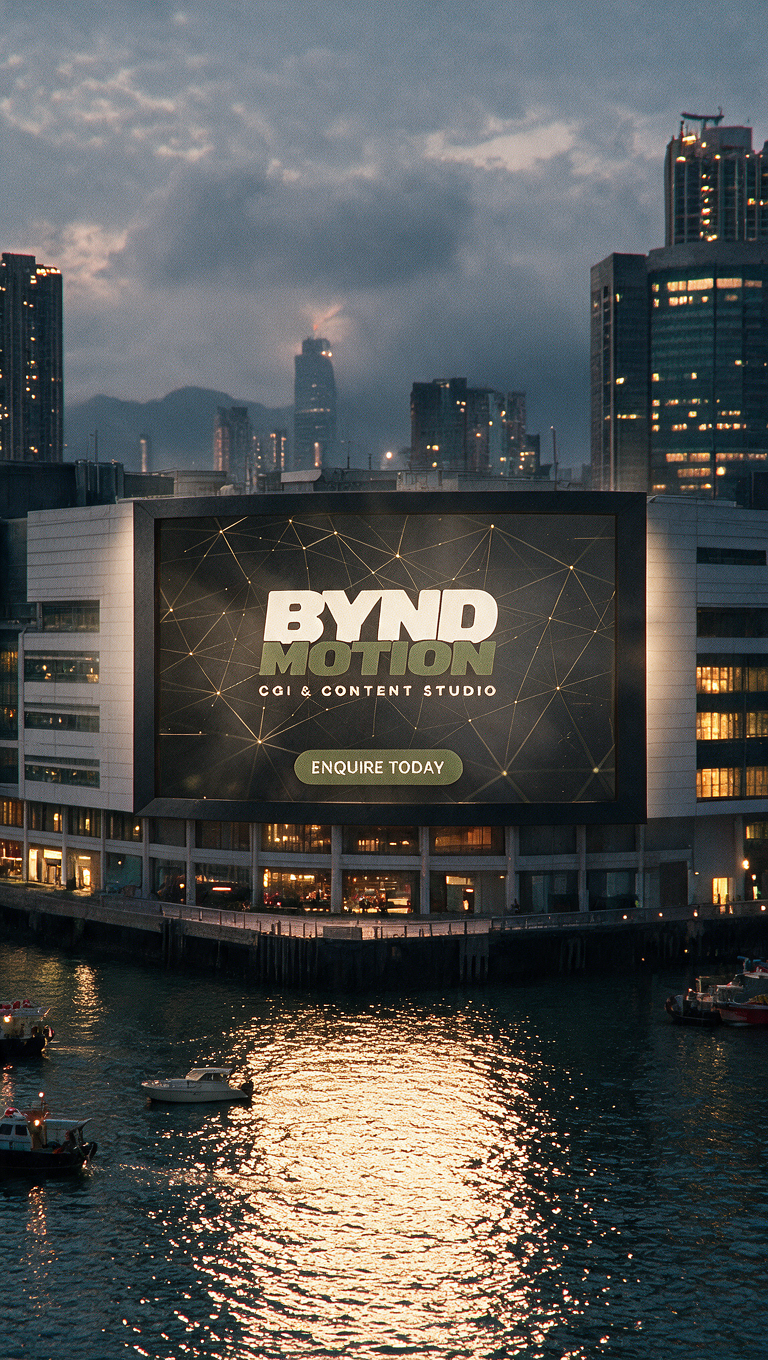
- A believable setting. Light, reflections, weather and camera movement have to match the location, or the eye rejects it.
- A natural camera. Many of the most shared pieces look as though a passer-by filmed them on a phone.
- The brand in frame early. The product or logo should be readable without sound and without a caption.
- Vertical first. It is made for phones, so it should be framed for them from the start.
- Sound that sells the scene. Street noise, a reaction or a simple track makes the moment feel real.
How a FOOH Ad Is Made
- Concept. The idea, the location and the single moment the film is built around.
- The location plate. Footage or imagery of the setting, either filmed, licensed or created.
- Tracking. The camera's movement is matched in software so added elements sit in the scene correctly.
- Modelling. The billboard, product or object is built in CGI from accurate references.
- Lighting and materials. The CGI is lit to match the plate, including reflections and shadows.
- Animation and simulation. Anything that moves, drapes, inflates or falls is animated.
- Compositing and grade. Everything is combined and colour matched so it reads as one shot.
- Sound and delivery. Audio is added and the film is exported in the crops each platform needs.
This follows the same stages as any CGI film. If you are still weighing CGI against a filmed shoot, our guide to CGI vs live action video sets out when each one fits.
Keeping FOOH Honest: The Rules in Australia
FOOH works because it looks real, which is exactly why it needs care. Using CGI in advertising is legal. What matters is the overall impression the content creates.
Two reference points are worth knowing. The ACCC explains that businesses must not make false or misleading claims, and that a business must be able to prove a claim that a product has a particular quality or benefit. And the AANA Code of Ethics, the advertising industry's self-regulatory code, requires that advertising be clearly distinguishable as such to the relevant audience.
In practice, sensible habits for a FOOH campaign include:
- Make the brand obvious, so the piece reads as advertising and not as news footage or a stranger's video.
- Say it is CGI in the caption where viewers could otherwise believe a real event took place.
- Show the product accurately. Exaggerated scale is part of the format, but the product itself should match what you sell.
- Do not imply an endorsement, partnership or permission that does not exist, for example by placing your brand on a recognisable building or another company's property in a way that suggests they are involved.
- Be careful with real people, private property and other brands' logos appearing in the shot.
- Avoid depicting anything that would be unsafe or alarming if people believed it was real.
This is general information, not legal advice. If a campaign pushes the boundaries, have it checked by a qualified adviser before it goes live.
How to Commission One: Your Brief Checklist
A good brief makes a FOOH project faster and the result stronger. Before you contact a studio, pull together:
- The goal. A launch, a sale, brand awareness or a specific market you want to reach.
- The product. Design files, packaging artwork, dimensions and reference photos, so the model is accurate.
- The idea, if you have one. Even a rough sentence helps. If you do not, say so, and ask for concepts.
- Locations. Cities or types of setting that matter to your audience.
- Where it will run. Platforms, formats and whether it will be used in paid ads as well as organic posts.
- Brand rules. Logos, colours, fonts and anything that must or must not appear.
- Timing. The date it needs to go live and who signs off.
- Usage. How long and where you want to use the finished film.
Questions to Ask a Studio
- Can you show CGI work where the lighting and camera movement feel real?
- Where does the location footage or imagery come from, and is it cleared for commercial use?
- What will I see and approve before the final render?
- How are changes handled once animation is locked?
- Which formats and crops are included?
- Who owns the finished film, and what can I do with it?
How We Work at Bynd Motion
We are a CGI and content studio, and every project runs through five stages: brief, concept, look development, production and delivery. You sign off a still frame that looks like the final film before production begins, so there are no surprises at the end. You can see our selected work, read about what we make on our services page, and learn more about the studio.
Got an idea for a FOOH campaign, or a product that deserves one? Tell us what you are launching and where you want it seen, and we will come back with concepts. Start a project.